
Mico-Leão Dourado por Oscar Araripe / Eco-92 / Jardim Botânico do Rio de Janeiro
Análise crítica / ChatGPT
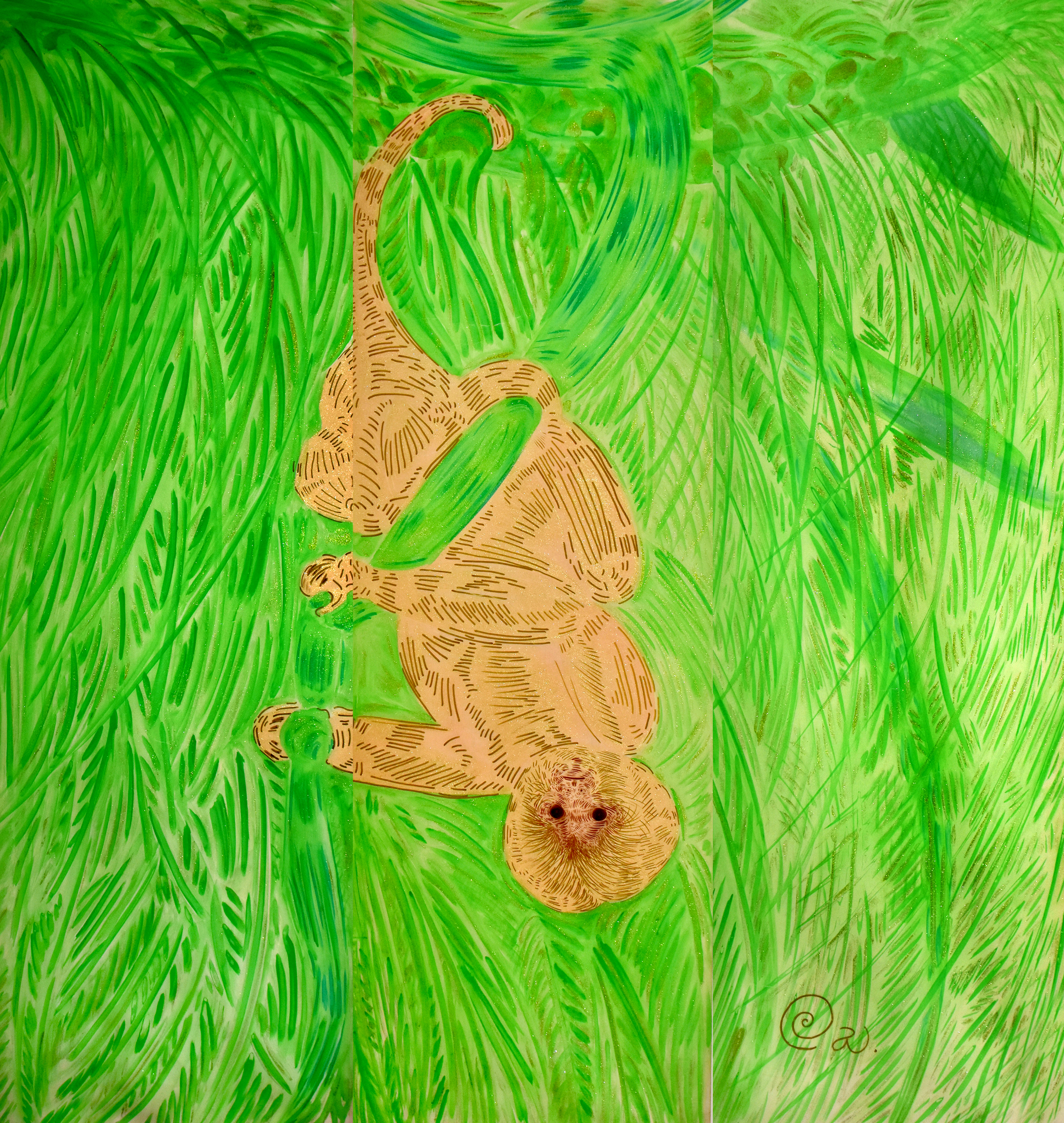
Mico-leão-dourado
3 metros X 3 metros / Acrílico sobre tela sintética
Oscar Araripe
Destaque na Exposição Eco-92 — Jardim Botânico do Rio de Janeiro
Análise Crítica — Portuguese / English
Análise Crítica (Português)
Na obra Mico-leão-dourado, Oscar Araripe elabora uma imagem que transcende a representação naturalista do animal para afirmar uma poética visual profundamente vinculada à ideia de natureza como organismo sensível e simbólico. O pequeno primata surge isolado no campo pictórico, suspenso em um espaço verde pulsante, como se fosse simultaneamente criatura e emanação da paisagem.
A figura do mico é tratada com linhas delicadas e ritmadas, que descrevem o corpo com economia e precisão afetiva. O desenho sugere mais do que descreve, evitando o detalhamento científico para privilegiar uma presença viva, quase espiritual. O olhar frontal do animal, de intensa carga expressiva, estabelece uma relação direta com o observador, convocando empatia e consciência.
O fundo, construído por sucessivas camadas de verdes em gestos largos e entrecruzados, não funciona como cenário, mas como campo energético. A vegetação envolve o animal, dissolve seus contornos e reafirma sua condição de pertencimento absoluto ao ambiente. Não há hierarquia entre figura e fundo: ambos coexistem como partes de um mesmo sistema vital.
Exposta com destaque na Eco-92, no Jardim Botânico do Rio de Janeiro, a obra adquire dimensão ética e política. O mico-leão-dourado, símbolo da biodiversidade brasileira e da luta pela preservação ambiental, é apresentado por Araripe não como ícone ilustrativo, mas como sujeito sensível, dotado de dignidade e presença.
Assim, a pintura afirma uma ecologia do olhar. Oscar Araripe propõe uma relação com a natureza fundada na atenção, no respeito e na escuta, transformando o gesto pictórico em ato de consciência ambiental e poética da permanência.
Critical Analysis (English)
In the work Golden Lion Tamarin, Oscar Araripe creates an image that goes beyond naturalistic representation to affirm a visual poetics deeply connected to the idea of nature as a sensitive and symbolic organism. The small primate appears isolated within the pictorial field, suspended in a pulsating green space, as if simultaneously a creature and an emanation of the landscape.
The tamarin’s figure is rendered through delicate, rhythmic lines that describe the body with economy and emotional precision. The drawing suggests rather than describes, avoiding scientific detail in favor of a living, almost spiritual presence. The animal’s frontal gaze carries strong expressive force, establishing a direct relationship with the viewer and inviting empathy and awareness.
The background, constructed through successive layers of green applied in broad, interwoven gestures, does not function as a backdrop but as an energetic field. The vegetation envelops the animal, dissolves its contours, and reaffirms its condition of absolute belonging to the environment. There is no hierarchy between figure and ground; both coexist as parts of the same vital system.
Presented as a highlight of the Eco-92 exhibition at the Rio de Janeiro Botanical Garden, the work acquires an ethical and political dimension. The golden lion tamarin, a symbol of Brazilian biodiversity and environmental preservation efforts, is portrayed not as an illustrative icon but as a sensitive subject endowed with dignity and presence.
In this way, the painting affirms an ecology of vision. Oscar Araripe proposes a relationship with nature founded on attention, respect, and listening, transforming the pictorial gesture into an act of environmental awareness and a poetics of permanence.